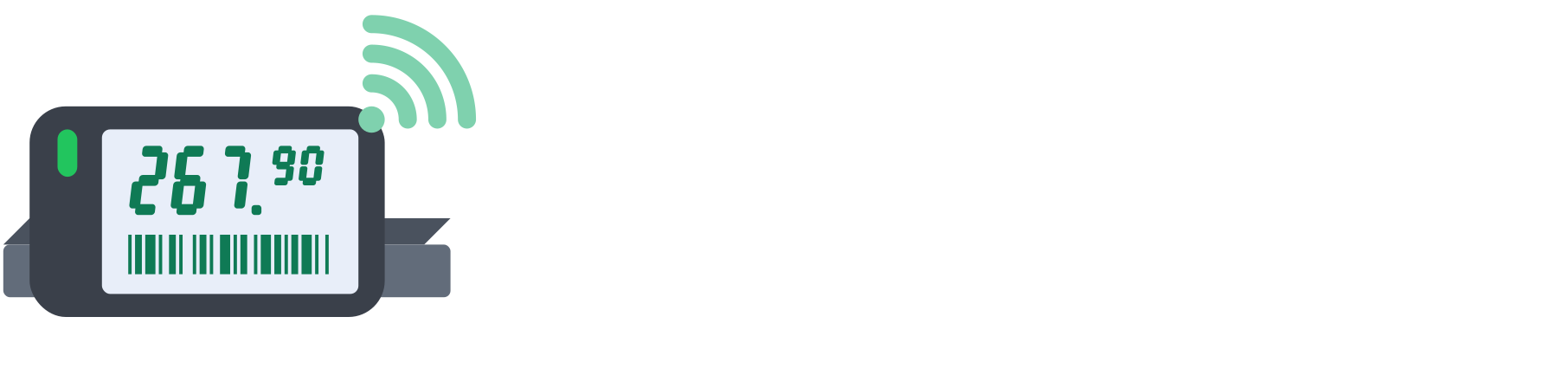
Three ways for a price to reach the shelf
Electronic labels around the world do not all work the same way. There are three basic approaches, and each comes with its trade-offs.
- Infrared light. An older technology, the same as a TV remote. It is reliable, but the ceiling transmitter must "see" every label, so shelving, tall stock and layout changes get in the way.
- Bluetooth. Excellent for headphones and watches, where one device stays paired with another. With thousands of labels, pairing them one by one becomes slow, and the same airwaves are full of customers' phones and devices.
- Private radio protocol. A wireless radio link with no line of sight needed, and no pairing: the base station addresses one specific label, and the label listens only for its own name. Leading electronic label systems worldwide use this approach, and it is the path we chose.
The same air, a language of its own

2.4 GHz is the same frequency used by Wi-Fi, Bluetooth and many devices in a store. The difference is the language: our labels and base stations talk to each other in a private protocol that other devices do not understand, and they do not understand those devices either. A customer's phone cannot connect to a label, and a label listens to nothing but its own base station.
Before sending, the base station first listens to check that the air is clear, and only then transmits. So in a busy store full of phones and devices, it does not shout over the others but picks its moment.
A label that sleeps, but hears its name
A label sleeps most of the time and uses almost nothing. It wakes briefly only to listen whether the base station is calling it by name. If not, it goes straight back to sleep. If so, it receives the new price, shows it and reports that it arrived.
That is exactly why the battery lasts for years, not days as with devices permanently connected to Wi-Fi or Bluetooth. No charging, no cables to the shelf and no rounds of the store with a screwdriver.
What it means for your store
- Price changes in the middle of the day. Prices change while the store is full of customers, with no closing and no night shift.
- No cables and no line of sight. You can move and rearrange shelving, and the labels stay connected.
- A protected link. The radio link between the base station and the labels is encrypted, so the shelf price comes only from your system.
- Confirmation from the shelf. Every label reports that it received and displayed the new price, so nothing is left to assumption.